






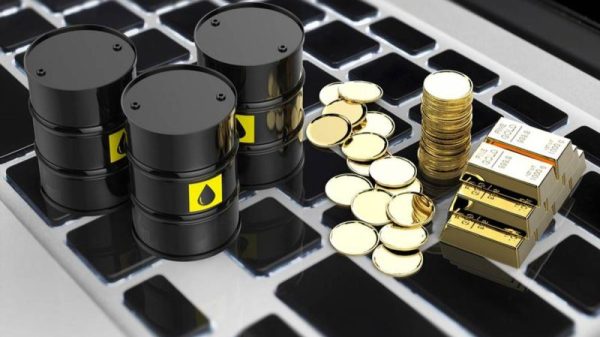










Gold broke the US$2,000 per ounce mark again this week, drawing strength ahead of the US Thanksgiving holiday. Factors buoying the metal include a 2.5 month low in the US dollar on Tuesday (November 21).
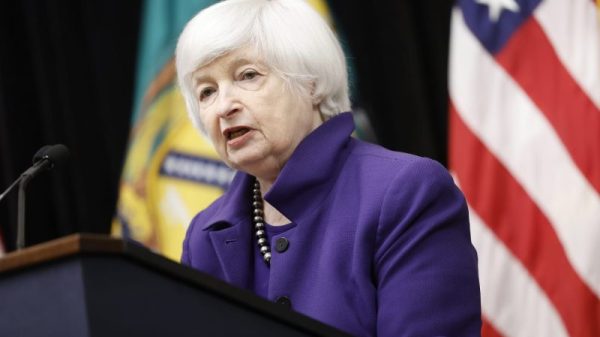
The currency did get some support later that day after the release of the US Federal Reserve’s latest meeting minutes. The summary shows that while officials continue to keep a close eye on inflation, they plan to proceed carefully.
Most market watchers are not expecting further interest rate hikes during this phase, and CME Group’s (NASDAQ:CME) FedWatch tool shows that a cut isn’t widely expected until May 2024.
The Fed has consistently reiterated its 2 percent inflation target, and last week’s consumer price index (CPI) data shows prices were up 3.2 percent year-on-year in October, although they were unchanged month-on-month. Core CPI, which excludes food and energy, was up 4 percent from the year-ago period and 0.2 percent from September.
The central bank’s next meeting is set to run from December 12 to 13.
Sprott’s Ciampaglia talks uranium price
Gold isn’t the only commodity that’s been making moves. Uranium continues to power steadily higher, and this week the spot price passed US$80 per pound for the first time since 2008.
I heard recently from John Ciampaglia of Sprott Asset Management, who said the sector has entered its next phase, but is still early in the current cycle. He also weighed in on where the price may go next, saying that while people shouldn’t invest with the expectation that uranium will spike, there are reasons to believe it could.
Here’s how he explained what’s happening with the price of uranium:
Why people anchor on to this spike theory is because it is a very concentrated supply chain. You have one country that produces 45 percent of the world’s uranium — it’s like the equivalent of having a single country (with the) power of OPEC. So it is a highly concentrated supply chain. When you add in all the other countries … like Uzbekistan and China and Russia, they control a pretty significant size of the overall global production. And then more recently we’ve had a coup in Niger, which is another country that produces 4 percent of the world’s uranium.
People focus on this risk that if there’s a disruption in any of those countries we could have a short-term squeeze or a supply crunch. And that could cause the price to spike.
Stay tuned for the interview with Ciampaglia, which we’ll be posting next week. And if you want to know more about today’s uranium landscape in the meantime, check out our playlist from the New Orleans Investment Conference — it includes great conversations on uranium with experts like Rick Rule, Lobo Tiggre, Gwen Preston and more.
Securities Disclosure: I, Charlotte McLeod, hold no direct investment interest in any company mentioned in this article.